All Categories
Featured

Strategies to Leverage Foreign Capital Potential in 2026
Table of Contents
A new report from UBS has the answers. This year, the bank performed its annual study of billionaire clients on several topics, consisting of where they plan to invest their cash for 12-month and five-year periods.
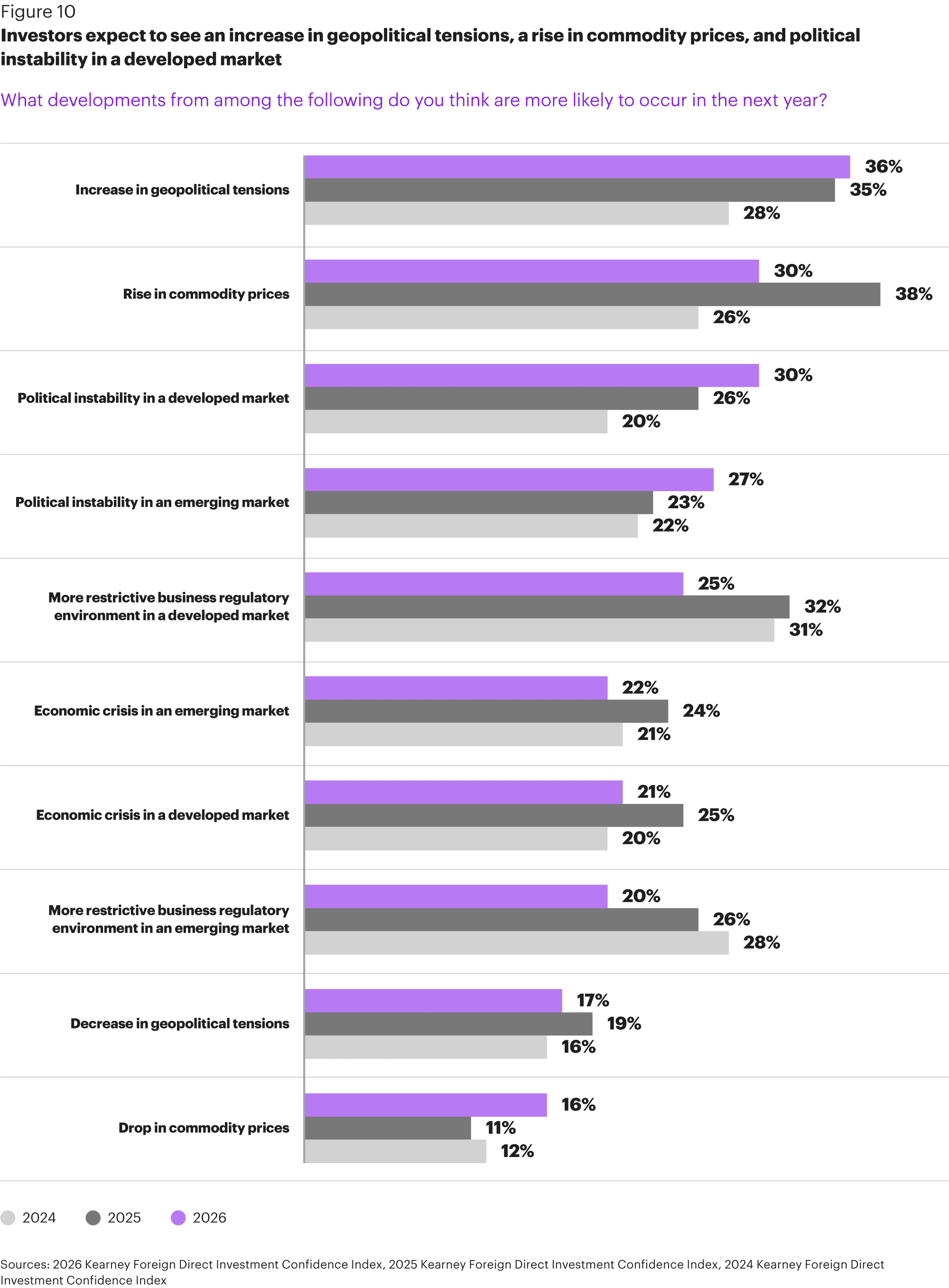
Forty percent of participants said they see opportunity in Western Europe over the next 12 months, up from 18% in 2024. For China, 34% of respondents see opportunity versus 11% in 2015. The Asia Pacific region, leaving out China, likewise saw an eight percentage point jump in interest, with 33% of participants bullish.
While 80% of respondents liked the area in the 2024 study, simply 63% said they performed in 2025 The shifts in sentiment are due to a number of risks that stress billionaires, the main amongst them being tariffs. Sixty-six percent of participants pointed out tariffs as one of the factors "more than likely to negatively affect the marketplace environment over 12 months." That was followed by a possible significant geopolitical conflict at 63%, policy unpredictability at 59%, and higher inflation at 44%."I do not see North America as the top financial investment destination, although its markets remain deep and ingenious," one of UBS's European customers stated.
We prefer to shift focus towards genuine assets, which provide more tangible worth and protection in unpredictable or inflationary environments. Equities over bonds can make sense in the current cycle, but our approach stresses stability and durability instead of short-term market moves."Still, while shorter-term outlooks have changed considering that in 2015, views for the next 5 years have usually stayed the very same for most areas compared to 2024.
Current Middle East Stock Market Patterns to Watch
Private, not public, equity was the most common property where participants said they mean to put their cash over the next 12 months. Forty-nine percent stated they plan to have their money in direct private equity financial investments. The next most common locations to invest remained in hedge funds and public industrialized market equities, both at 43%.
At the same time, participants also revealed higher intents of pulling their cash out of private equity than openly traded stocks. UBS Examples of funds that offer direct exposure to the general public possessions billionaire investors are most bullish on for the year ahead include the iShares MSCI Eurozone ETF (EZU), iShares MSCI China ETF (MCHI), the International XEmerging Markets ex-China ETF (EMM), and the Vanguard Tax Managed Fund FTSE Established Markets ETF (VEA).
Stacked bar chart revealing cumulative ETF flows (in billions of dollars) by country from 2015 to 2026. Each bar represents a year, with sectors for Brazil, Mexico, South Korea, China, Germany, Japan, Taiwan, and India. Values above no show inflows; listed below no suggest outflows. Flows are unpredictable over time. A strong inflow appears in 2015, followed by a sharp outflow in 2016, driven mainly by Japan.
Capital Diversification Strategies for a 2026 Global Market
Strong inflows continue in 2023 and 2024, with significant contributions from Japan and India. After a smaller positive year in 2025, inflows increase again to start 2026, led by South Korea and Japan.
AI is not just an US story. This massive costs on AI infrastructure has assisted create organization growth around the globe.
(Some international stocks do not have shares or ADRs noted on United States exchanges. Based on business' costs plans, these capital circulations are expected to continue in the coming months, Fidelity supervisors state.
Benefits of Global Capital Allocation in 2026
"Japanese companies have actually been leaders in offering fundamental base products and packaging-related innovations that are assisting fuel the innovation taking place in the semiconductor market," says Masaki Nakamura, supervisor of the (). One company that has actually highlighted this theme is (),4 a leader in materials utilized in chip fabrication and packaging.
Another company that has benefited is (),6 a semiconductor supplier whose items support a broad range of electronic and commercial applications.

Latest Posts
Advantages of Scaling Manufacturing Projects in Middle East

How Industrial Diversification Will Shape GCC Markets

Why GCC Industrial Diversification Fuels 2026 Growth